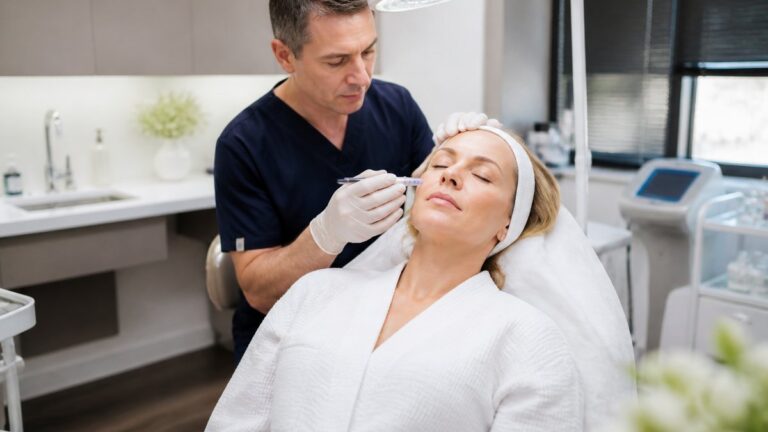
The jawline and neck can lose definition when fat collects under the chin or skin loosens. Because these concerns have different causes, the right plastic surgery treatment depends on whether excess fat, loose skin, or both are contributing to the change. Here are some of the procedures surgeons use to enhance the jawline and neck:
Remove Fat Under the Chin
Fullness under the chin is frequently treated by removing excess fat through liposuction or reducing fat cells with injections. Liposuction involves the surgeon making a small incision beneath the chin, then inserting a thin tube to suction out the fat. Deoxycholic acid injections work differently because they break down fat cells in the targeted area, which the body gradually clears.
Skin quality plays a necessary role in determining how much the jawline and neck profile changes after treatment. During an evaluation, surgeons assess the amount of excess fat, skin laxity, and underlying neck structure before discussing suitable options. Patients with significant loose skin often require a plastic surgery procedure that addresses both fat and skin rather than fat removal alone.
Lift Jowls With a Facelift
A facelift addresses signs of aging in the lower face, including sagging cheeks, loose skin, and jowls along the jawline. During surgery, the surgeon accesses the underlying facial support structures and adjusts their position to improve facial contours. The surrounding skin is then fitted over the revised contours, and excess tissue is removed as needed.
Incisions are placed around the hairline and natural creases near the ears, where they are less exposed once healed. The extent of the procedure depends on the areas being treated and the degree of tissue laxity. A neck lift is also performed in some cases to address loose tissue beneath the jaw; this creates a more consistent transition between the lower face and neck. Additional surgical techniques used to improve facial support and contour include:
- Tightening underlying tissues: Surgeons adjust facial muscles and connective tissues to provide structural support and maintain the repositioned contours.
- Removing excess skin: Trimming redundant tissue reduces visible sagging, while careful closure limits unnecessary tension along incision lines.
- Repositioning facial fat: Transferring existing fat into hollow areas restores volume and addresses changes in facial fullness that skin tightening alone does not correct.
Tighten Loose Skin
A neck lift improves definition by addressing loose skin, excess fat, and muscle bands beneath the chin. Surgeons access the platysma, which is the muscle that extends across the front of the neck. Tightening this muscle helps create a firmer appearance beneath the jawline and reduces the visibility of vertical bands.
The surgeon also removes excess fat and adjusts the surrounding skin to create a smoother contour. These steps address different sources of neck aging and help establish a more defined angle between the chin and neck. Incisions are frequently positioned around the ears, and their placement depends on the amount of correction needed. Some patients also require an opening beneath the chin to access deeper tissue or remove localized fat. This additional access provides a direct route to the central neck structures during surgery.
Other patients qualify for a less extensive technique that uses shorter incisions and addresses more limited changes. The surgeon determines the appropriate approach by evaluating skin laxity, fat distribution, and the overall neck contour. Following surgery, recovery instructions include limiting strenuous activity and wearing a supportive bandage or compression garment; these steps help manage swelling and protect the treated area.
Explore Plastic Surgery Services
Choosing a surgical approach involves evaluating the factors affecting the jawline and neck, including excess fat, loose skin, and changes in facial support. A surgeon reviews the chin position and neck muscle structure to determine which procedure best addresses these concerns. Schedule an appointment with a plastic surgeon today and explore which procedure is right for you.